Green tea, EGCG
Also called: EGCG, green tea extract, catechins.
Last reviewed 2026-09-16. How this works.
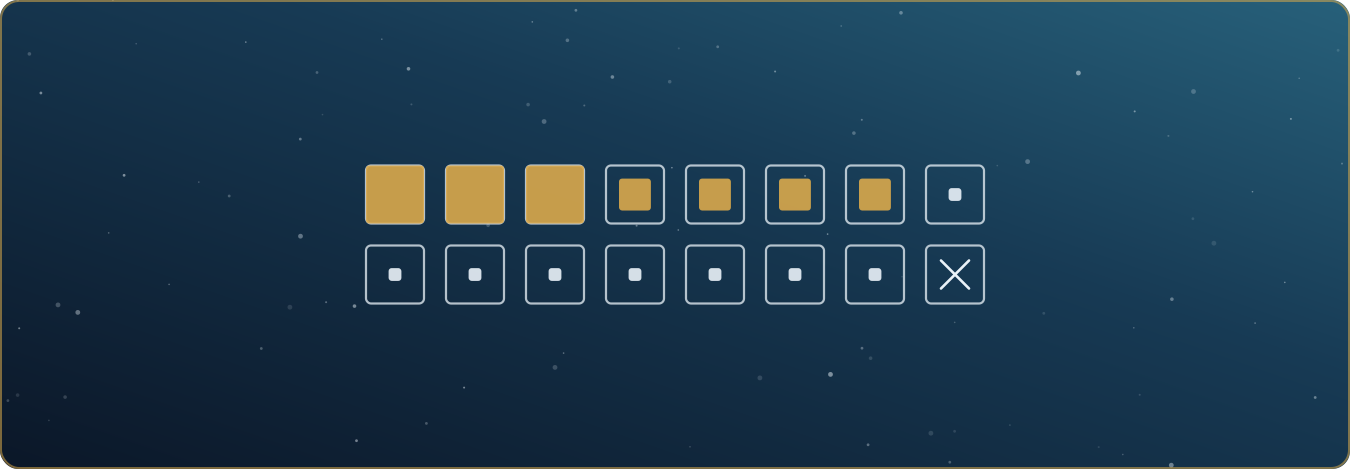
Treating cancer Grade D
No human evidence of benefit, or none that survived testing.
Lots of trials have used green tea, and none of them tested it alone to see if a cancer got better.
Ninety-one completed trials, and none isolating green tea against a cancer outcome.
The claim
The claim is that EGCG, a compound in green tea, acts against cancer cells.
What it does
EGCG is active against cancer cells in a dish. The same question applies as to every compound in this chapter: what concentration was needed, and can a person reach it. The register holds no measurement of either for green tea.
The evidence
Ninety-one completed studies of green tea or EGCG in cancer are registered, which is a large literature by the standards of this chapter.1
One of them has a cancer outcome as its primary endpoint: bladder cancer recurrence at two years. In that trial green tea extract was given together with a licensed drug, so whatever it found cannot be attributed to the green tea.1
So the position is not that nobody has looked. It is that ninety-one studies have looked at markers, tolerability and metabolites, and the one that measured a cancer outcome could not tell green tea apart from the drug beside it.1
The harm
What has not been looked at
Drinking tea and taking a concentrated extract are different exposures, and the register holds no safety data for the extract in someone having cancer treatment.
Scope: concentrated extracts alongside cancer treatment.
Nobody has run a search to establish this, so it is the register’s reading of what exists rather than a gap somebody has looked for and confirmed.
What is absent
No completed trial has tested green tea or EGCG on its own against a cancer outcome. The single trial with a recurrence endpoint gave it alongside another drug.
Scope: green tea alone, with a cancer outcome.
Established by registry search, ClinicalTrials.gov, query intervention "green tea OR EGCG", condition "cancer", status completed
, checked 2026-09-16. Result: ninety-one completed studies; one cancer-outcome endpoint, in combination with erlotinib.1
What to ask
Would a concentrated green tea supplement be any different from drinking tea, as far as my treatment is concerned?
The dish-to-person gap
Green tea extract is eaten as food rather than taken as a measured compound, and the register holds no human pharmacokinetic measurement for it.
When to call your team — no warning signs are recorded
Whatever you are taking or thinking of taking, the people treating you can only weigh it if they know about it. That is true when nothing has been written down here, and it is most true then.
The register records no warning signs for this entry. That is not a statement that nothing can go wrong.
Interactions
The register holds no measured interaction between green tea and a cancer treatment class. The citation audit records a green tea and bortezomib interaction reached through a citing review; it is not in the chapter notes and is not recorded here.
Nobody having looked is not the same as nothing being there. That is what this line says and all it says.
The whole interaction list, and how to turn it into a pharmacy review request.
Find a trial instead
Ninety-one completed studies exist. What to look for is what each of them measured.
Search ClinicalTrials.gov for recruiting studies of green tea OR EGCG OR polyphenon E
A trial is the same decision with monitoring, a known preparation and a doctor who knows what else you are taking.
References
A search of the ClinicalTrials.gov registry for completed studies of this intervention in cancer, run on 16 September 2026. 91 completed studies returned.
https://clinicaltrials.gov/api/v2/studies?query.intr=gree…
How this was reached: search run during build, via a search run during the content build; not a source the manuscript carries.